
The 30-Day Window Starts When You Establish Residency
Virginia law requires new residents to register every vehicle within 30 days of establishing residency in the state. The clock starts not when you cross the state line, but when you take actions that demonstrate you live here: signing a lease, accepting employment, enrolling children in school, or registering to vote. If you moved three weeks ago and brought two cars, both vehicles are already halfway through their registration window—and each car's deadline runs independently.
The 30-day rule applies per vehicle. A household moving with three cars faces three separate 30-day windows that all start on the same residency date. Virginia also mandates uninsured motorist coverage at the same limits.
Compare car insurance rates in your state
Get quotes from licensed carriers — no obligation, no spam, results in minutes.
Get Your Free QuoteVA New Resident Registration Window
30 days
The window begins when you establish residency—signing a lease, starting a job, or enrolling dependents in school—not when you physically move. Every vehicle you own must be registered within this period.
Virginia Department of Motor Vehicles
What Counts as Establishing Residency in Virginia
Virginia defines residency by intent and action, not by the date you unload the moving truck. You establish residency when you take steps that demonstrate you intend to live in Virginia indefinitely. Signing a lease or purchasing a home is the clearest trigger. Accepting a job in Virginia, registering to vote, or enrolling children in a Virginia public school also establish residency on the date those actions occur.
If you moved on June 1 but did not sign your lease until June 15, your 30-day registration window starts June 15. If you signed the lease June 1 but did not start your job until June 20, the earlier date controls—your window started June 1. The DMV does not send a reminder. The burden is on you to track the date and register all vehicles before the deadline.
Out-of-state students attending Virginia colleges and military personnel stationed in Virginia under orders are exempt from the 30-day rule and may keep their home-state registrations. Everyone else—including remote workers who moved to Virginia permanently—must register within 30 days of residency.
Each vehicle you own has its own 30-day deadline starting from your residency date. A household with three cars faces three simultaneous countdowns, not one shared grace period.
What You Need to Register Each Vehicle
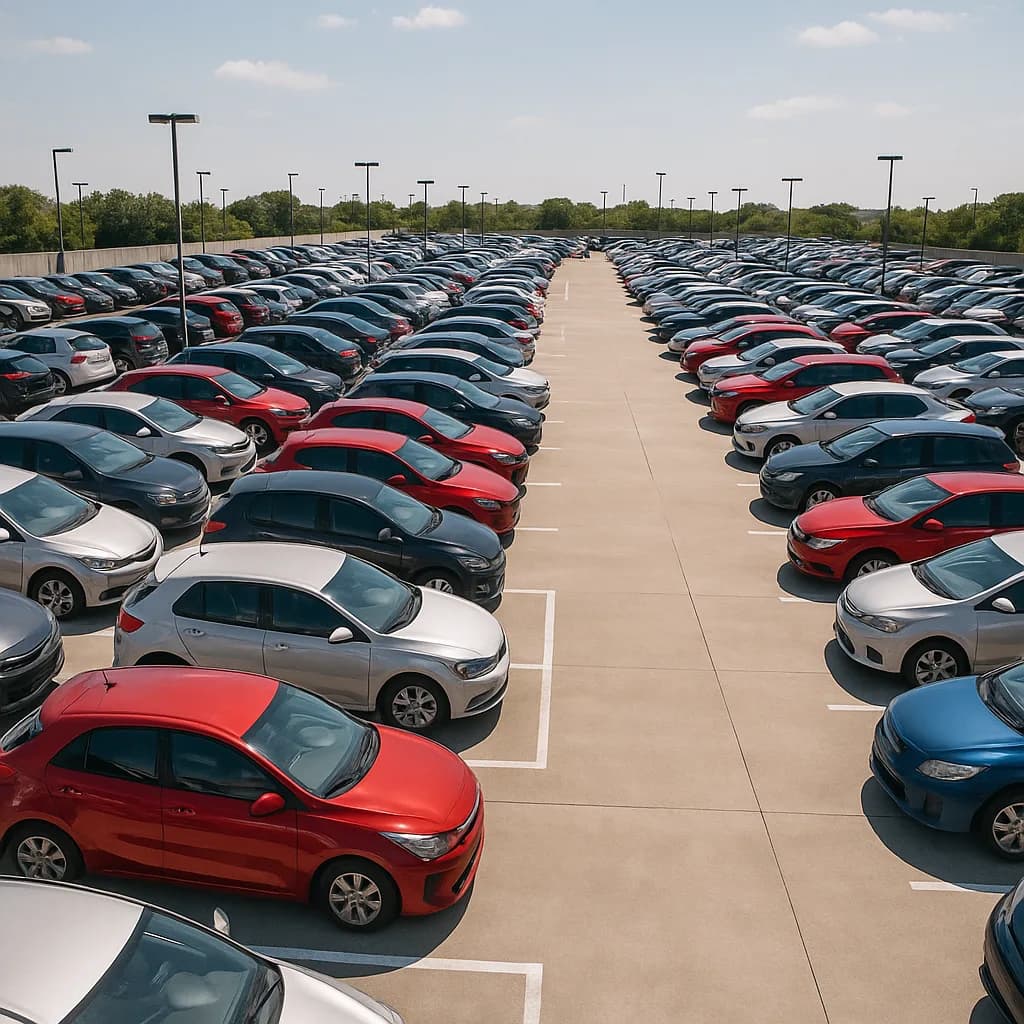
Bring the out-of-state title for each vehicle, signed by all listed owners. If a lienholder holds the title, bring the original title or a letter from the lender authorizing registration in Virginia. Bring proof of Virginia auto insurance meeting state minimums for every car: your insurance ID card or a declaration page listing each vehicle, the policy effective date, and coverage limits. Virginia will not register a car without proof that it carries at least $50,000/$100,000/$25,000 liability and matching uninsured motorist coverage. Bring a completed Application for Certificate of Title and Registration (Form VSA 14) for each vehicle, your current driver license or Virginia-issued ID, and proof of a passed Virginia safety inspection within the past 30 days for each car.
If you own two cars, you need two safety inspections, two VSA 14 forms, and insurance proof listing both vehicles on your Virginia policy. The DMV will not register the second car using documents prepared for the first. A household registering three cars pays three title fees, three registration fees, and three safety inspection fees upfront.
Related Articles


How Virginia Insurance Requirements Affect Multi-Car Registration
Virginia requires every registered vehicle to carry liability insurance at or above state minimums: $50,000 per person and $100,000 per accident for bodily injury, plus $25,000 for property damage. The state also mandates uninsured motorist coverage at the same limits. If your out-of-state policy carried lower limits—common in states with $25,000/$50,000 minimums—you cannot register any vehicle in Virginia until you increase coverage on every car.
Most carriers let you add Virginia as your garaging state and adjust limits on all vehicles in one call, effective immediately. If you insure two cars on one policy, both cars must meet Virginia minimums before either can be registered. Trying to register one car while leaving the second on your old policy creates a gap: Virginia will not issue registration for a vehicle that does not appear on a compliant Virginia policy, and your out-of-state policy likely terminates coverage once you establish residency in a new state.
The multi-car registration deadline intersects with the insurance update deadline. If you wait until day 28 to call your carrier and discover your current insurer does not write policies in Virginia, you have two days to find a new carrier, bind coverage on all vehicles, receive proof-of-insurance documents, and complete registration at the DMV. Twelve percent of Virginia motorists drive uninsured; do not become one of them because you assumed your old policy would transfer automatically.
Virginia Minimum Liability Limits
$50,000 / $100,000 / $25,000
Every vehicle registered in Virginia must carry at least $50,000 per person and $100,000 per accident for bodily injury liability, plus $25,000 for property damage. Uninsured motorist coverage at the same limits is also mandatory.
Virginia DMV
Consequences of Missing the 30-Day Deadline
Driving an unregistered vehicle in Virginia is a Class 2 misdemeanor, punishable by a fine up to $1,000 and potential jail time. If you are stopped during the grace period with an out-of-state registration and proof of recent residency, officers typically issue a warning and direct you to the DMV. After the 30-day window closes, the same stop can result in a ticket, impoundment, and a court date. Virginia also penalizes uninsured driving separately: if your out-of-state policy lapsed or does not meet Virginia minimums, you face an additional $500 uninsured motorist fee and potential license suspension until you provide proof of compliant coverage for every vehicle you own.
Register All Vehicles in One Visit or Separately
Virginia allows you to register multiple vehicles in a single DMV visit if you bring complete documentation for each car. Registering two cars at once requires two titles, two safety inspections, two insurance proofs, and two completed VSA 14 forms. The DMV processes each vehicle as a separate transaction but can handle them consecutively at the same counter. Registering three cars in one visit saves you two additional trips but requires you to gather every document for every vehicle before you walk in.
If one car's title is delayed or one vehicle fails its safety inspection, you can register the compliant vehicles immediately and return later for the delayed car—but the 30-day deadline still applies to the delayed vehicle independently. Waiting to register all cars together when one has a documentation issue puts every vehicle at risk of missing the deadline. Register the ready vehicles first, then handle the problem car separately before its window closes. The multi-car household's advantage is efficiency, not a extended grace period.